English section
G4Media’s Blatant Manipulation of the WSJ Article. How the Allegation Against the U.S. Ambassador Was Fabricated
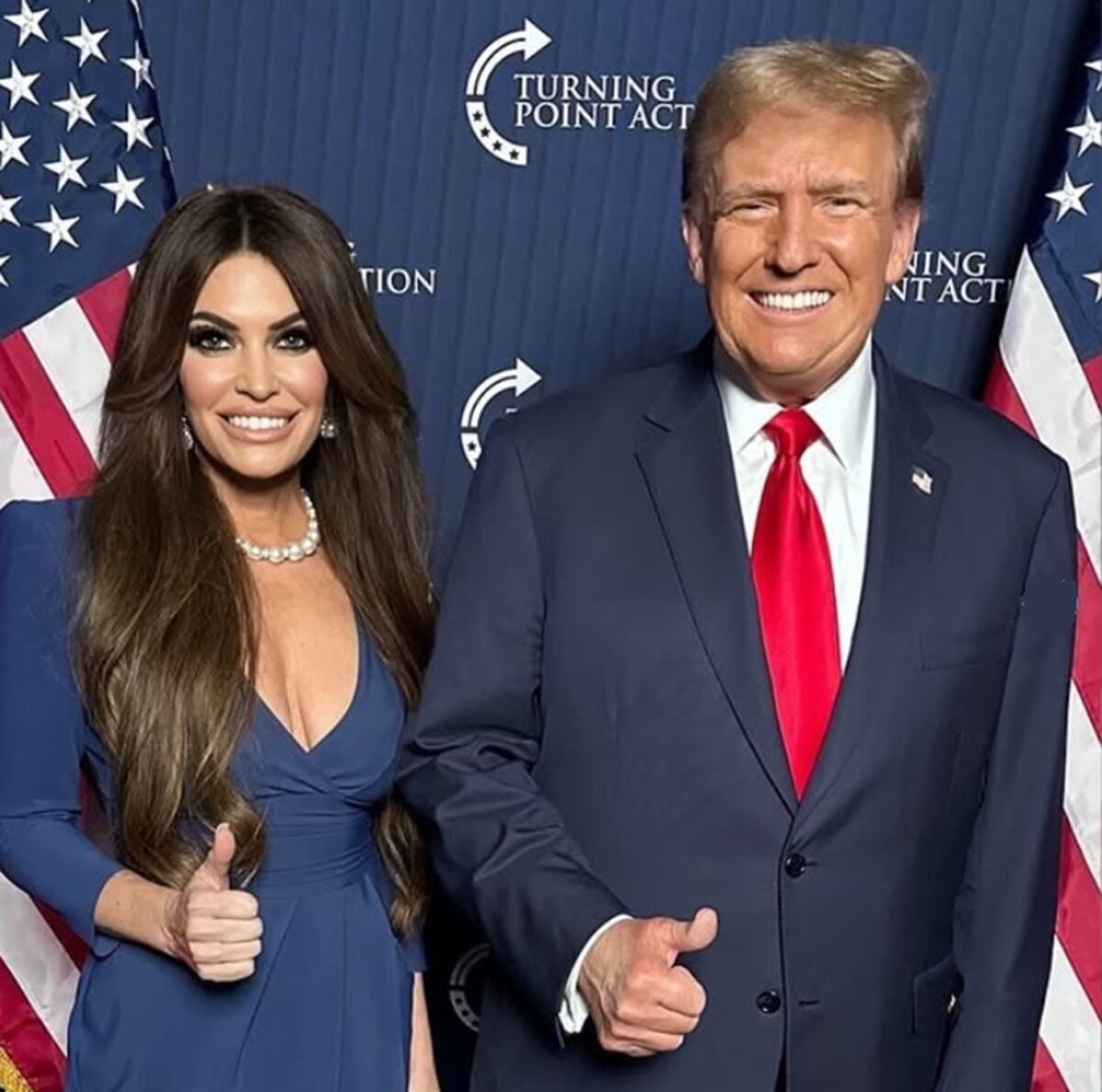 Kimberly Guilfoyle Donald Trump / sursa foto: Instagram
 Adaugă-ne ca sursă preferată în Google
 Urmărește-ne pe Google News
Din cuprinsul articolului
A blatant piece of media manipulation has gone viral. It centers on a passage from a Wall Street Journal article about Kimberly Guilfoyle, the U.S. ambassador to Greece. As presented by G4Media, an outlet some consider a serious news organization, that passage became the starting point for an explanation of the Bolojan government’s fall. Let’s be clear from the outset: the quote does appear in the WSJ article. That is the only part that is real! But it does not carry the weight or meaning that G4Media assigns to it.
Manipulation Through Quotes
We have a quote. We translate it, insert it into the story, and then slap on a bombshell headline: U.S. Ambassador to Greece, a Trump Ally, Said the U.S. Was Allegedly Involved in Ousting the Bolojan Government, According to The Wall Street Journal! That, essentially, was the tactic.
Everything else, however, is blatant manipulation: no evidence is presented of an American operation to remove the ousted prime minister.
We are presented with a U.S. operation that could not have been motivated by gas deals for one simple reason: it does not appear anywhere in the WSJ article. Yet the prestigious American newspaper is cited as the source.

The whole thing is a journalistic fabrication by G4Media, desperate to defend the interests of Ilie Bolojan & Co.
Any journalist with even a little experience could have spotted the editorial problem: the enormous gap between what the source—the WSJ—reports and what readers of G4Media’s article may come away believing.
What the WSJ Says About Kimberly Guilfoyle and the Romanian Government
The Wall Street Journal investigation examines a potential conflict of interest: the U.S. ambassador to Greece’s relationship with lobbyist Christos Marafatsos and her promotion of Aktor in regional natural gas deals. Several people interviewed say Marafatsos’s ties to Aktor were not disclosed to them. This distinction is essential: the WSJ describes him as a registered lobbyist in the United States, not as a lobbyist who failed to register as required by law.
Against this backdrop, the article recounts an incident at a dinner in Athens in March. The reporters write that Guilfoyle, referring to the impending collapse of the Romanian government, allegedly said:
“We can do that to any country we want. We can do that here.”
The account is based on one person who attended the dinner and others who were told about the incident. The ambassador’s lawyer disputes the characterization of the exchange.
The Ambassador Was Discussing a Government’s Collapse Before It Had Happened
Here is the first problem! The Bolojan government fell on May 5, 2026, while the conversation is dated to March 2026. That is two to three months before the event. So the U.S. ambassador was boasting in Athens about something that had not happened yet.
The reference to Romania appears in the original; G4Media did not invent it. But the interpretation that the remark suggests possible American intervention is entirely unfounded in the context described.
There is another problem with G4Media’s journalistic manipulation. Romania appears in three passages in the WSJ article. Bolojan is not named in any of them. So on what basis are we supposed to conclude that she was talking about him?
Where Is Bolojan Mentioned?
In the full version of the investigation, Romania is mentioned in three passages, without being the main subject.
Aktor and Atlantic-SEE signed memorandums of understanding and commercial agreements with gas companies in several countries, including Romania. No Romanian company is named. The WSJ does not name Ilie Bolojan, report any Romanian opposition to the Vertical Corridor, or mention Sorin Grindeanu, Nova, or the Doicești project. Those details appear only in the article published by G4Media.
G4Media, then, does more than report on the WSJ article: it uses it to construct an editorial thesis of its own. An investigation into diplomacy and potential conflicts of interest becomes the framework for an explanation of alleged American interference in the fall of the Bolojan government.
Where G4Media Stretches the Narrative
G4Media’s article opens with the wording “said the U.S. was allegedly involved.” The quote published by the WSJ contains neither that explicit wording nor Bolojan’s name. G4Media adds the context toward the end, but none of those elements appears in the WSJ article.
The article then closes with a reference to an analysis by G4Media’s own Dan Tăpălagă about energy interests and the no-confidence motion against Bolojan. As Emilia Șercan would put it, that is self-citation. Or plagiarism. The publication identifies its sources, but grouping this material around the WSJ revelations can create the impression that the entire theory has been independently corroborated. In reality, G4Media’s article is corroborated by another G4Media article.
This unjustifiably extends the source’s authority beyond what it actually reports. The WSJ supports the account of the conversation and investigates the relationship between diplomacy and commercial interests. Nowhere does it substantiate the conclusion that Bolojan was ousted through U.S. intervention because he refused to buy American gas.
G4Media Tries to Fix Things and Only Makes Them Worse
G4Media includes the qualifications about the sources and the lawyer’s objection in the body of the article. It also publishes responses from Sorin Grindeanu and George Simion.
The ethical problem lies in the imbalance between the force of the allegation suggested by the headline and the limits of the evidence presented in the text. Readers who see only the headline may come away with a certainty that a careful reading does not support.
But why let the details get in the way when G4Media has just pulled off an effective piece of manipulation...
Recomandările noastre